Container Workshop Solutions

Mobile and permanent workshop facilities for trades, mining maintenance, fleet servicing, and field operations. Three-phase ready, fully fitted, deployable to any site.

Workshops That Move With Your Work

A workshop has to be more than a covered space with power. It needs three-phase capacity for serious machinery. It needs ventilation where welding, painting, and chemical work happen. It needs floor loading rated for vehicles, lifting frames, and the weight of stored components. It needs storage that doesn’t waste floor space. And for most of our customers, it needs to be relocatable – to follow the work, demobilise at project close-out, and redeploy at the next job.

That’s what container workshops do better than any fixed-shed alternative. The structural shell is engineered for marine loads – you can stack them, move them with cranes, transport them on standard tilt-trays. The fit-out is what turns the shell into the workshop your team actually uses. And the combination gives you something you can’t easily get otherwise: a fully featured workshop that arrives, works, and leaves on your terms.

What a Container Workshop Includes
Structural base

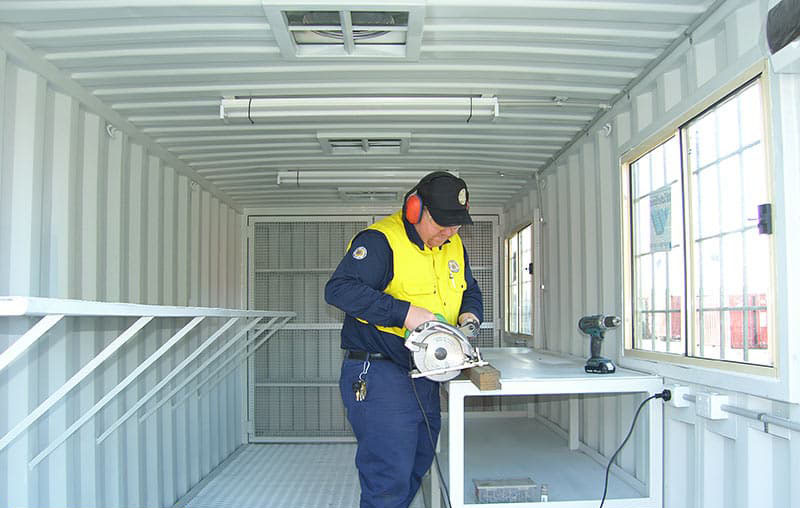
40ft high cube container preferred for headroom (2.69m internal height after fit-out is comfortable for most workshop activities). 20ft units for smaller workshops or where space is the constraint. Reinforced flooring rated for the loads going on it – vehicle storage requires heavier flooring than tool storage.
Three-phase electrical

415V three-phase distribution, single-phase circuits for general lighting and power, dedicated circuits for welders, compressors, and machine tools. Sized to the equipment list at quote time. Compliant to AS/NZS 3000 with electrical certificate.
Ventilation

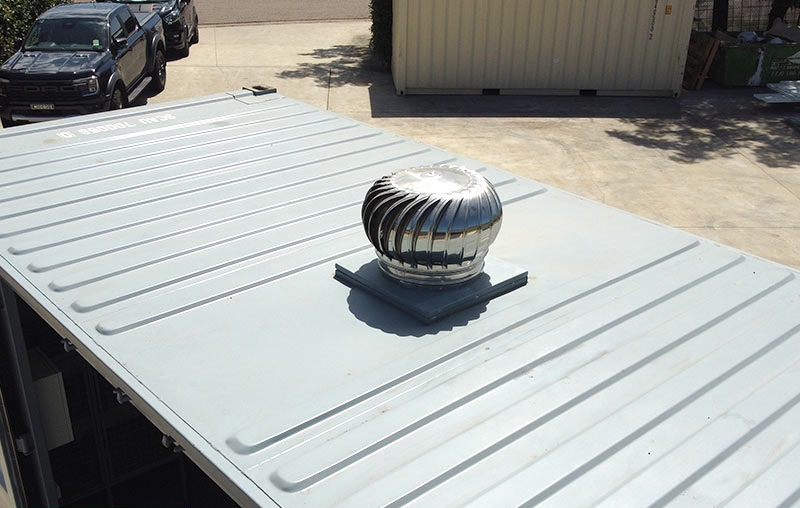
Cross-flow passive ventilation as standard. Mechanical extraction for welding bays, spray-painting areas, or chemical work – wall-mounted extractors with explosion-rated motors where required.
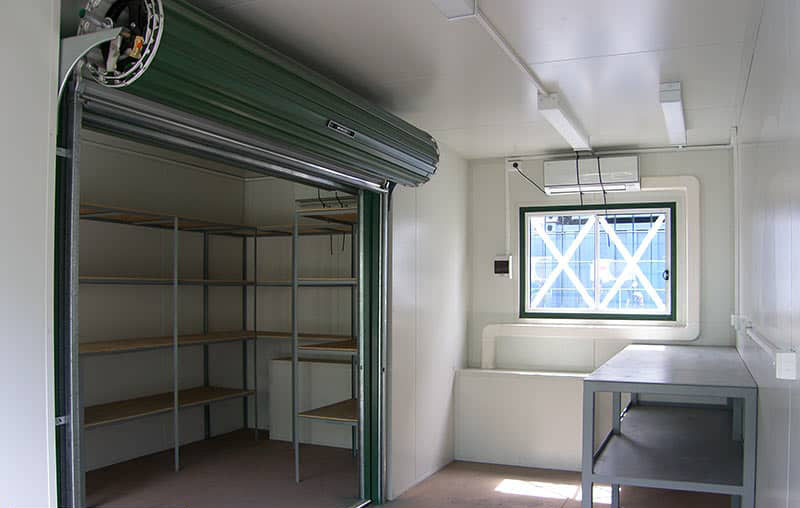
Roller doors and personnel access

Industrial roller doors at the rear (where the standard cargo doors were) for vehicle and large-equipment access. Personnel door at the side for everyday use. Both lockable, weather-sealed, and rated to operational duty cycles.
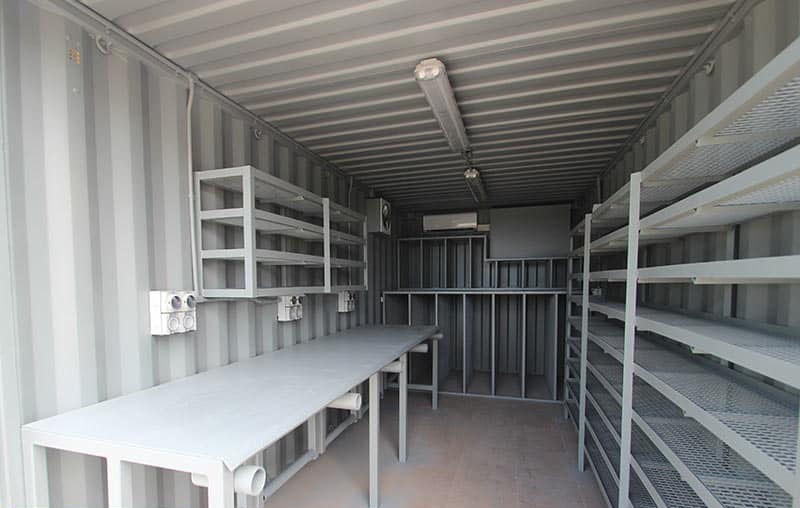
Workbenches and tool storage

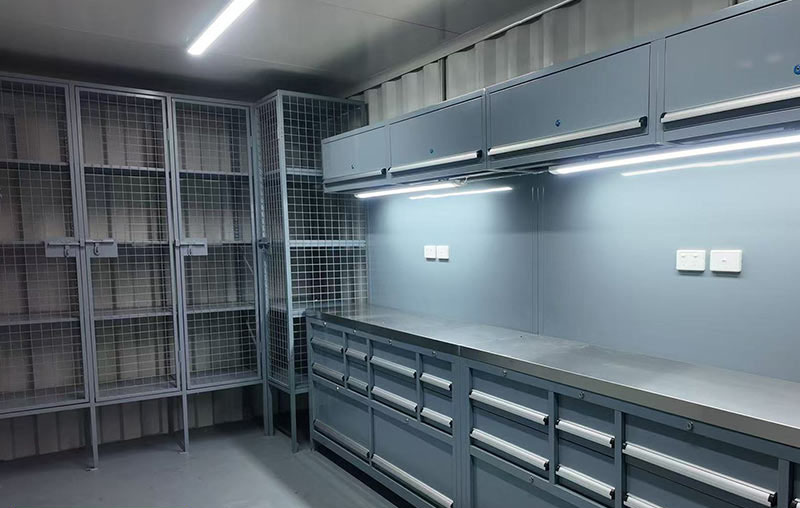
Wall-mounted workbenches with shadow boards, parts storage racks, pegboards, and equipment lockers fitted to your tool list. Bench heights and depths specified to the work being done.
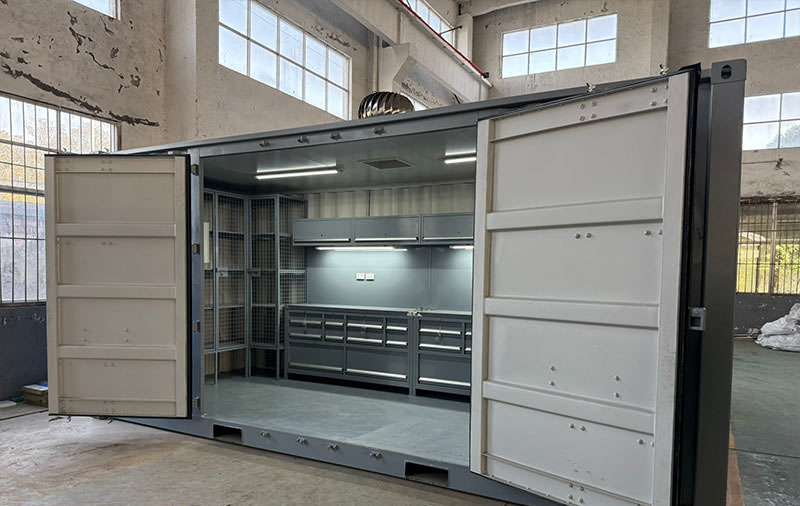
Lighting

LED high-bay or panel lighting sized to work-light levels. Task lighting at workbench positions. Emergency lighting where the workshop is occupied after hours.
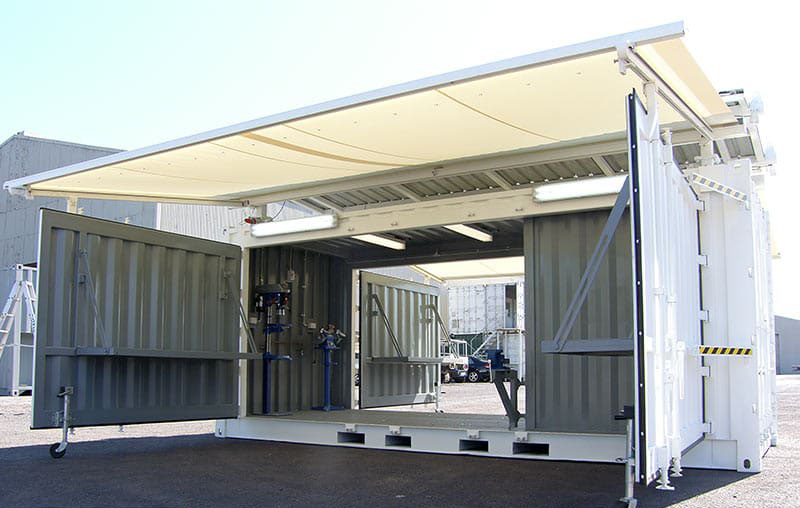
Compressed air and gas reticulation

Where required, compressed air lines reticulated to bench and bay outlets. Gas reticulation (LPG, oxy-acetylene, argon) to welding bays with appropriate isolation valves.

Why Mobile Workshops Win Over Fixed Sheds

Speed of deployment

A container workshop arrives on a truck, is craned into position, connected to services, and operational within days. A fixed shed takes months from approval to commissioning.

Capital efficiency

A fully fitted 40ft workshop runs $45,000–$85,000 depending on spec. A comparable fixed shed with similar floor area, fit-out, and services usually exceeds $150,000 once site works, slab, and connections are costed.

Relocatability

Project finishes, the workshop leaves. New project, new site, same workshop. Fixed sheds become stranded assets when the work moves on.

Approval pathway

For temporary placement (under 12 months on most sites), container workshops often don’t trigger DA. Fixed sheds always do.

Modular expansion

Start with a single 40ft. Add a second alongside when needed. Configure as paired workshops or join internally for a larger space. The infrastructure scales with the work.

Common Workshop Applications

  • Mining Maintenance Workshops – Fixed-site and shutdown-deployable workshops for mining maintenance, parts changeouts, and field servicing. Built with three-phase power, hydraulic press benches, parts shelving, and full tool storage.
  • Mobile Trades Workshops – Mechanics, fabricators, electricians, and HVAC technicians running multi-site operations. Workshop becomes the rolling base – drops at the worksite, supports the work, relocates to the next job.
  • Fleet Service Bays – Container workshops fitted as service bays for vehicle fleets – buses, trucks, plant equipment. Pit options for under-vehicle access available on engineered configurations.
  • Field Service Operations – Exploration, agricultural, and remote-industrial operations needing a workshop on site for equipment maintenance. Generator-compatible electrical fit-outs for off-grid operation.
  • Fabrication and Welding Workshops – Dedicated welding bays with engineered ventilation, fire protection, and gas reticulation. Often paired with a separate storage container for plate steel and consumables.
  • Marine and Boat Workshops – Boat servicing, outboard repair, and marine trade workshops at marinas, slipways, and boatyards. Built to handle the unique environment of marine operations.

Frequently Asked Questions

Yes – for light commercial vehicles, plant, and most mining equipment up to medium size. The 40ft high cube provides enough length for service operations, the door height (2.58m) accommodates most vehicles. For full heavy-vehicle servicing requiring hoists and pits, container workshops are typically used as adjuncts to fixed bays rather than primary servicing facilities.

Standard workshop fit-out is 415V three-phase, 32A or 63A depending on the equipment list. We coordinate with your site electrician on the supply specification. For sites without three-phase mains, a 30–60kVA generator handles most workshop loads.
Custom configurations include underbench pits and under-vehicle access pits engineered into reinforced flooring. These add to the build cost and need engineering sign-off, but they’re built routinely for vehicle service applications.
Wall-mounted forced-extraction fans rated for welding fumes, sized to the air-change rate required. For high-volume welding operations, we recommend dedicated fume-extraction arms over the welding bays – these can be fitted as part of the workshop build or added retrospectively.
The workshop itself is reasonably acoustic – the steel structure attenuates internal noise. Compressors and ventilation fans are the main external noise sources. For noise-sensitive locations (residential adjacency, restricted hours), we spec quieter equipment and acoustic insulation as part of the build.
Yes – wet/dry pipe sprinklers, foam systems for fuel-handling workshops, and CO₂ for electrical/electronic workshops are all available. Required where insurance, regulatory, or site safety frameworks demand it.
On industrial-zoned land, usually yes – container construction is increasingly accepted by Perth councils for permanent commercial use. Submissions require engineering documentation, elevations, and compliance certificates which we supply.

Ready to Get Started?

Get a fast quote with transparent pricing. Delivery in 2-7 business days across Perth and WA.

Or call us directly: 08 6245 7940

Visit our depot: Suite 233/50 St Georges Terrace, Perth WA 6000